Why an engine misfires: main causes and diagnostics
Misfires never fix themselves – here is what to check, and in what order.
Misfiring can appear suddenly or develop gradually. Sometimes the cause is something simple, such as a worn spark plug that can be easily replaced without major repairs. However, similar symptoms can also be caused by a faulty ignition coil, fuel injector, air leak, low compression, incorrect valve timing, or a malfunction in the engine management system.
That is why it is extremely important not simply to replace the faulty component, but to find the root cause of the problem. In this article, our mechanic Alexey will explain why an engine misfires, how to perform an initial diagnosis and read fault codes yourself, and what the diagnostic process looks like at our car service in Warsaw.
What Does Engine Misfiring Mean and Why Does It Happen?
The term “engine misfire” generally refers to a failure of the air-fuel mixture to ignite properly in one or more cylinders. The driver may notice the following symptoms: the engine runs with noticeable vibrations, the idle speed is unstable, the car responds more slowly to the accelerator pedal, loses power, consumes more fuel, takes longer than usual to start, or produces unusual noises. The Check Engine warning light may also appear on the dashboard. In some cases, the problem occurs only under certain conditions, for example, the engine misfires only when cold, during hard acceleration, or only at idle.
Causes of Engine Misfiring and How to Diagnose Them
For a cylinder to operate properly, the engine needs the correct air-fuel ratio, a properly functioning ignition system, and correct mechanical operation. A problem with any of these conditions can lead to misfires.
- Worn or faulty spark plugs. Spark plugs are one of the first components checked when misfires occur in a gasoline engine. Over time, the electrodes wear out, the gap increases, and deposits or signs of electrical arcing may appear on the insulator. As a result, the spark becomes less stable. This problem is particularly noticeable under load: the engine may run relatively normally at idle, but jerking and loss of power appear during acceleration. During diagnostics in this case, we usually check the condition of the electrodes, the gap, the presence of carbon deposits, signs of arcing, and whether the spark plugs meet the engine manufacturer’s requirements.
- Faulty ignition coil. Modern gasoline engines often use ignition coils – one per cylinder or one coil for several cylinders, depending on the design. If a coil is faulty, the spark may become weak or disappear completely. A typical situation is when the engine starts misfiring during acceleration and runs somewhat more smoothly once the load is reduced. At RemZone, we always start with a swap test: we switch the ignition coil from cylinder 2 with the one from cylinder 1. If the P0302 fault code changes to P0301 afterward, the ignition coil is faulty. We then swap only the spark plug from cylinder 2 to cylinder 3. If the fault code changes to P0303, the problem is with the spark plug.
- Problems with fuel injectors and fuel delivery. A cylinder cannot operate properly if it receives too little or too much fuel. Possible causes include a clogged or faulty injector, electrical supply problems, insufficient fuel pressure, issues with the fuel pressure regulator, or problems with other components of the fuel system.
- Unmetered air entering the intake system. A leak in the intake system can also cause unstable engine operation. Additional air may enter the intake through damaged vacuum hoses, leaking connections, intake manifold gaskets, or components of the crankcase ventilation system. As a result, the actual air-fuel mixture differs from the calculated one. Usually, when this symptom is present, the engine runs unevenly at idle and the RPM fluctuates. To locate leaks at our RemZone workshop, we normally use a smoke machine.
- Low compression. Misfires can be caused by wear in the piston group, a damaged valve, a burned valve, head gasket problems, or other damage to the cylinder-piston assembly. The basic way to check this is to measure compression in the cylinders. If necessary, we also perform a leak-down test, which helps determine which component is allowing the pressure to escape. We always compare the results between cylinders and take the engine’s design characteristics into account.
- Incorrect valve timing. Problems can be caused by a stretched timing chain, a jumped chain or belt, faulty timing drive components, problems with variable valve timing components, or incorrect installation of the timing mechanism after previous repairs.
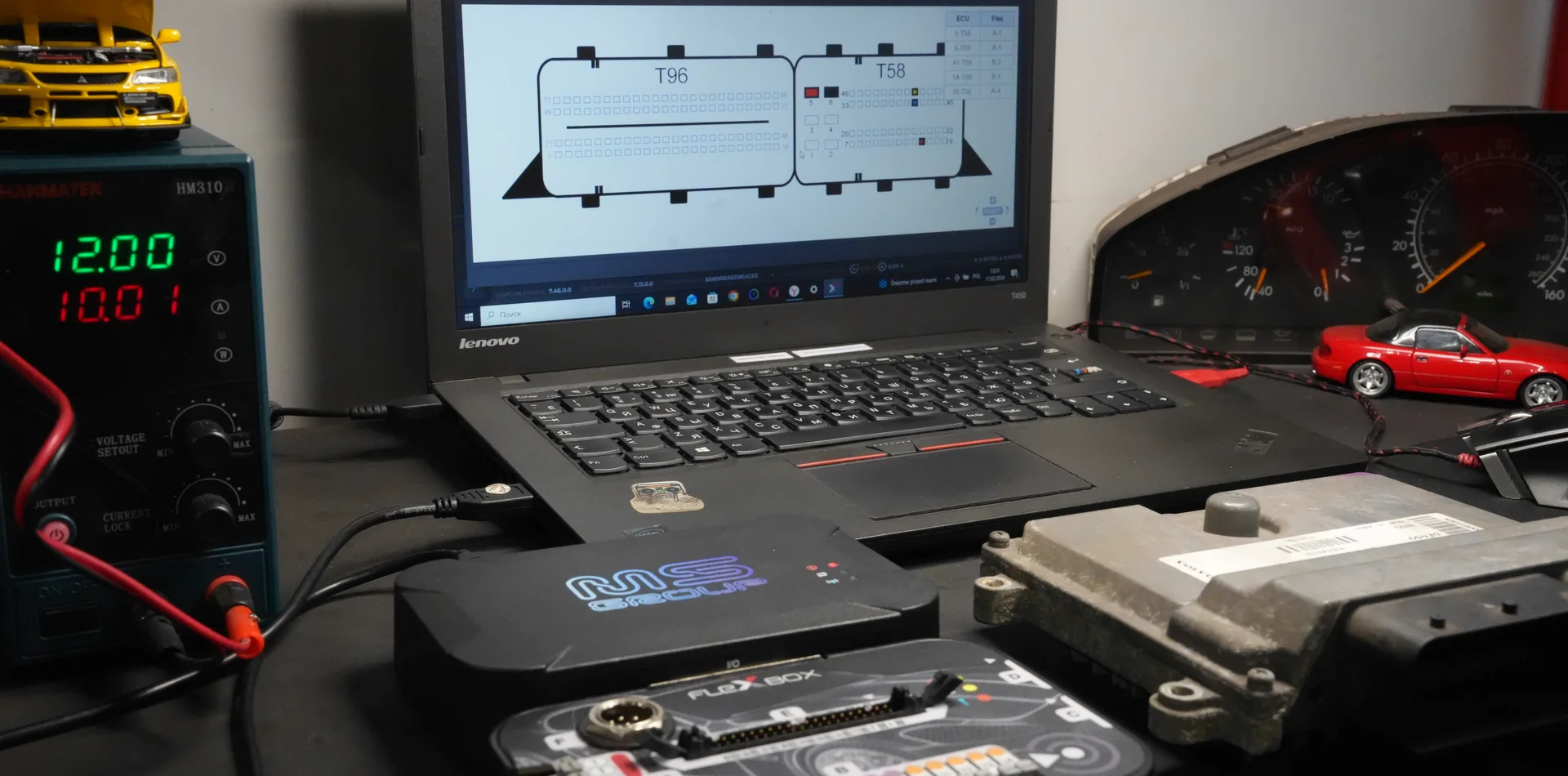
- Unstable operation of sensors, wiring, or the electronic engine management system. The engine control unit uses readings from various sensors to control the air-fuel mixture and ignition timing. Therefore, unstable engine operation may be caused by the crankshaft position sensor, camshaft position sensor, mass airflow sensor, manifold pressure sensor, oxygen sensor, damaged wiring, or corroded or damaged connectors. In this case, we diagnose the problem using professional diagnostic equipment. However, we always compare the diagnostic fault code with current operating parameters and the results of other tests.
- Poor-quality fuel. We consider this possibility if the engine started running roughly after refueling. This is especially likely if the vehicle was operating normally before refueling and then developed jerking, reduced performance, unstable idle, or misfire-related fault codes.
Can You Keep Driving If the Engine Is Misfiring?
If the engine is noticeably misfiring, it is not advisable to continue driving without having it diagnosed. During misfires, unburned fuel can enter the exhaust system and place additional stress on the catalytic converter. You should especially avoid continuing to drive if the Check Engine light is flashing, the engine is experiencing a significant loss of power, or there are severe jerking movements or unusual noises. In this situation, it is safer to stop and have the vehicle diagnosed.
What You Can Check Yourself
Without specialized equipment, a vehicle owner can collect enough information to help with further diagnostics. For example, you can check:
- Whether the Check Engine light is on or flashing.
- Read the fault codes using an OBD scanner.
- Inspect the spark plugs (if you have the necessary skills).
- Visually inspect the ignition coils, connectors, and vacuum hoses.
It is also definitely worth remembering when the problem appeared and what happened around that time.
This can significantly help with further diagnostics at the workshop. At RemZone, we first identify the fault, agree on the scope of work with the customer, and only then proceed with the actual repair. We use professional equipment and provide customers with photo and video reports. In Warsaw, our workshop has two locations: Białołęka, Brzeziny 6, and Mokotów, Ojcowska 2, where you can bring your vehicle for diagnosis and repair.
Need a mechanic's advice?
Computer diagnostics →