How to know if your clutch is worn: main symptoms of failure
The clutch is a key component of the transmission system that transfers torque from the engine to the gearbox, ensuring smooth starts, gear shifting, and the disconnection of power flow.
The clutch is a key component of the transmission system that transfers torque from the engine to the gearbox, ensuring smooth starts, gear shifting, and the disconnection of power flow. Sooner or later, the clutch of any car is subject to natural wear and tear. At the same time, relying solely on external symptoms can be misleading: identical manifestations can hide problems with the actuation system, a worn release bearing, the pressure plate, the flywheel, or issues in related components.
Over more than 10 years of work through the lifts of our service center in Warsaw, hundreds of cars with a wide variety of transmissions have passed through—from classic manual gearboxes to finicky automated ones. Based on this practice, we will examine in detail how to recognize clutch wear, which symptoms cannot be ignored, and in which situations delaying repairs becomes dangerous.
How the clutch works and what wears out in it
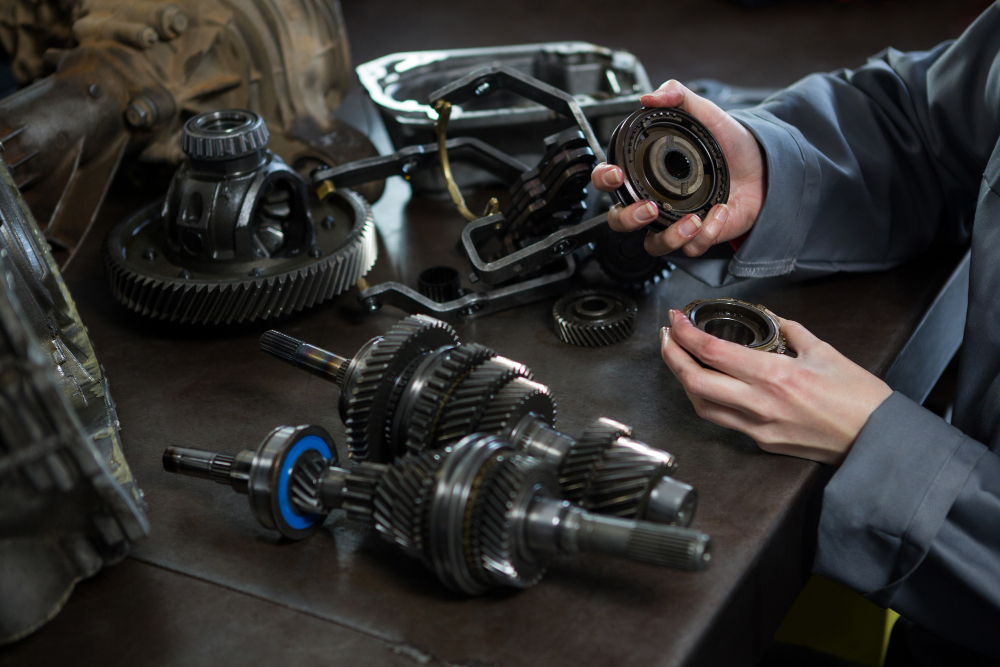
A standard manual or automated transmission assembly consists of the following interconnected components:
Clutch disc (friction disc) – transfers torque using friction facings.
Pressure plate (cover assembly) – ensures the disc is pressed tightly against the flywheel.
Release bearing – absorbs the force when the pedal is pressed and disengages the system.
Flywheel – connects the engine to the clutch (modern diesels and powerful petrol engines often feature a complex dual-mass flywheel).
Clutch actuation system – transfers force from the pedal (mechanical cable or hydraulic).
Our service's practice shows that the main consumable material here is precisely the friction facings of the driven disc. However, the list of potential weak points in the system is much broader.
Symptoms of a worn clutch
Slipping (clutch slip): when engine speeds (RPM) increase, but the car barely accelerates. This is a characteristic and most reliable symptom of friction material wear. The driver steps on the gas, the tachometer needle swiftly creeps upward, but the car gains speed very sluggishly. This is especially noticeable in higher gears (fourth, fifth) when the load is maximum, or when trying to accelerate uphill. If the disc is worn down to zero, it is unable to transmit torque from the flywheel to the gearbox. Operating a car with such a fault is unacceptable, as in just a couple of hundred kilometers this will lead to overheating of the flywheel and pressure plate due to continuous friction. After that, their replacement will likely be required.
A characteristic burning smell (of friction material), which is clearly sensed in the cabin and around the car. It usually occurs after unsuccessful parking with wheel spin in a snowdrift or deep mud, a prolonged start under load on a steep incline, or the habit of holding the car for a long time on a half-engaged clutch instead of using the parking or service brake. If a light smell appears once after aggressive spinning in the snow, it is too early to panic. But when the burning "aroma" regularly haunts you in everyday city traffic jams, the friction disc is at the final stage of its lifespan.
The car starts with jerks. A healthy transmission connection works smoothly and predictably. If, upon smoothly releasing the pedal, the car begins to jerk, shudder finely, or vibrate throughout the entire body, there can be several causes. Often the issue is uneven wear of the disc facings, its deformation from overheating, or oil spots on the surface (if, for example, the rear crankshaft oil seal is leaking). Similar symptoms are caused by a damaged flywheel or play in the disc's damping springs.
The pedal's "bite point" has changed. Every driver gets used to the pedal travel of their car. If the clutch begins to engage in the very upper position (when the pedal is already almost fully released), this is a sign of severe wear of the friction disc and a decrease in its thickness. However, relying solely on this symptom is definitely not recommended, as pedal behavior is also strongly influenced by the characteristics of the hydraulic system or cable adjustment, so it must be evaluated in combination with the other signs.
The pedal has become too soft, stiff, or sinks to the floor. Here much depends on the drive design. For example, in hydraulic systems, pedal sinking or loss of elasticity is often associated with a brake fluid leak, or wear of the master or slave cylinder seals. In cable mechanisms, in turn, the cable can simply seize in its housing or stretch, causing the pedal to become heavy and jumpy. If you notice any change in the usual pedal effort, we advise looking under the hood and checking the fluid level (if the drive is hydraulic) or the condition of the cable.
Gears have become difficult to engage or crunch. If the gear lever has stopped moving into its position easily and a metal crunch or resistance appears when engaging first and reverse gears, the clutch is not fully disengaging. The cause can be air in the hydraulic drive, worn-out fork joints, or warping of the clutch disc, which continues to partially transmit rotation to the gearbox input shaft.
An extraneous noise appeared when pressing the pedal. This can be a hum, whistle, rustle, or metal scraping that occurs at the moment the clutch is disengaged (and disappears when the pedal is released). Such noise may indicate wear on the release bearing. Delaying its replacement can be dangerous, as a destroyed bearing can jam, punch through the pressure plate fingers, and completely immobilize the car right on the road.
How to independently check the clutch without disassembly: recommendations from "RemZone"
An express evaluation can be performed during a regular drive, without resorting to dangerous tests like "dropping the clutch while on the handbrake." Such experiments can kill your transmission. We check as follows:
During acceleration. Evaluate: when sharply pressing the gas in third or fourth gear, do the engine RPMs rise adequately to the speed gained, or do they "fly" upward faster than the car manages to accelerate?
When starting off. Does the car move off smoothly, or does it shudder, vibrate, and jerk?
When shifting gears. How do gears engage: crisply, or do they require extra effort and get accompanied by a crunch?
By the pedal. Evaluate whether the usual pedal travel has been preserved, and whether there is any feeling of "sponginess" or sinking.
Odors. Has a sharp burning smell appeared in the cabin after urban traffic or parking in the yard?
If two or more points from the list match your situation, the clutch requires an instrumental inspection. Come to our car service in Warsaw, and we will carry out all the necessary procedures.
What accelerates clutch wear
A universal mileage "before replacement" does not simply exist. Considering the specifics of capital traffic in Warsaw with constant gridlocks, traffic lights, and tight parking in narrow courtyards, the load on the assembly increases manifold. Because of this, even with careful driving, the urban lifespan of the clutch can be exhausted much faster than when driving on the highway. Clutch lifespan is also affected by driver habits: resting your foot on the clutch pedal while driving (even light pressure forces the release bearing to constantly work under load), frequent and aggressive starts with wheel spin, towing heavy trailers, or driving through deep off-road terrain.
The clutch rarely fails suddenly; the car always starts to "signal" in advance in the form of vibrations, odors, changes in pedal travel, or slipping. Timely diagnostics at the first symptoms will save you from costly transmission repairs.