
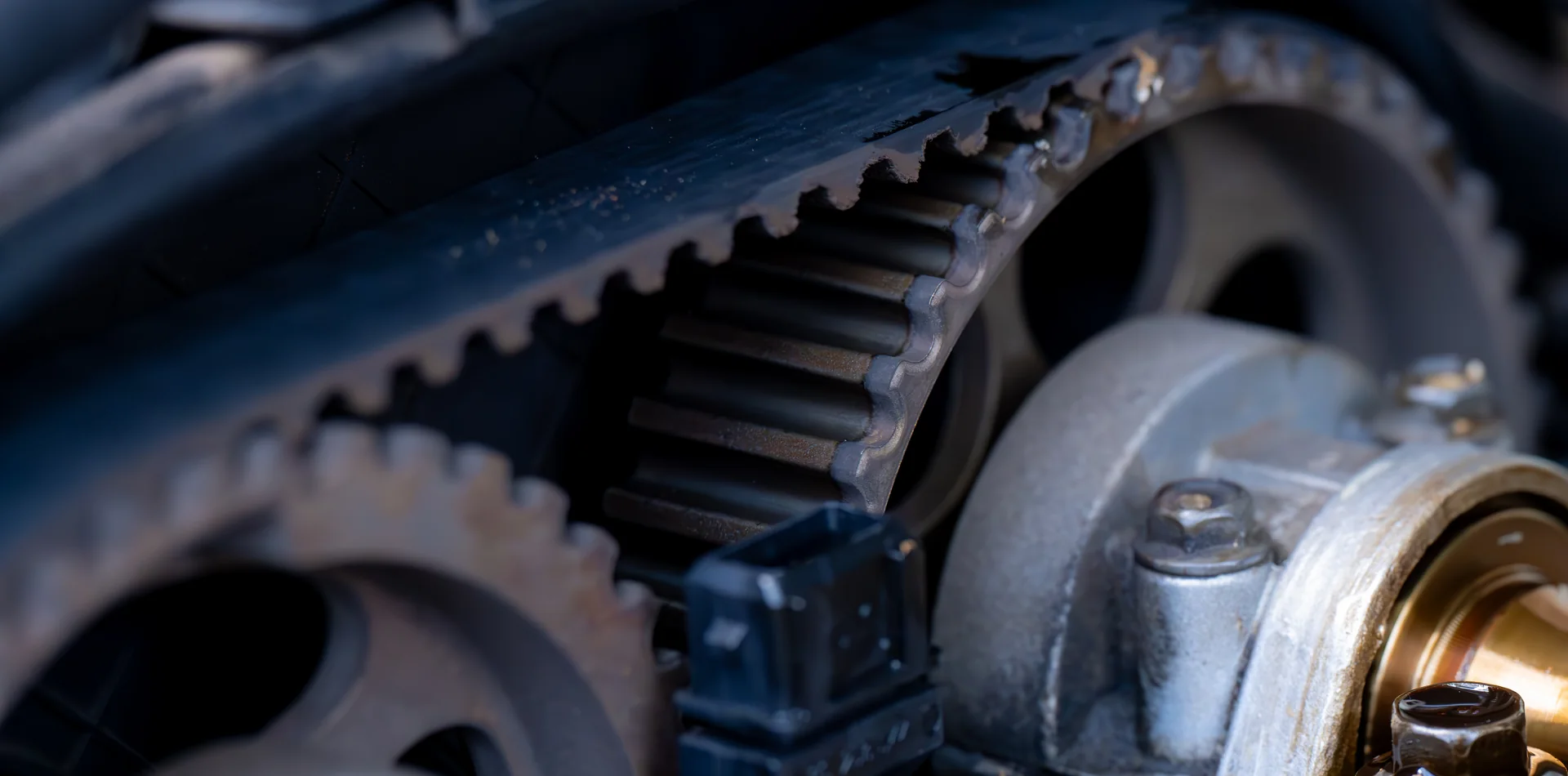
Timing replacement (belt, chain, rollers)
Timely timing replacement helps avoid engine repairs later
The timing system synchronises the valves and pistons. We replace the belt or chain together with the rollers and pump on schedule – to avoid a snap and a costly engine repair.
Why your car needs it
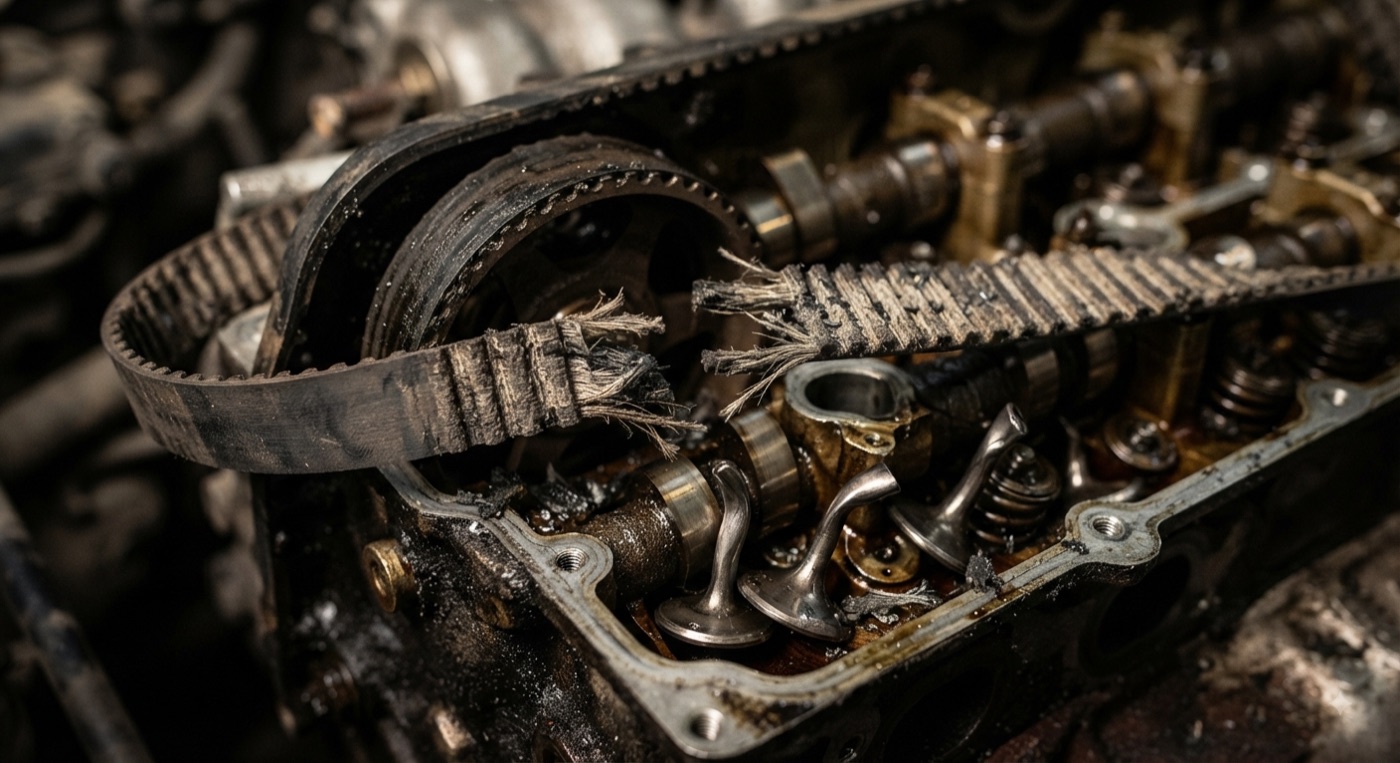
A snapped timing belt damages the valves and pistons in most engines.
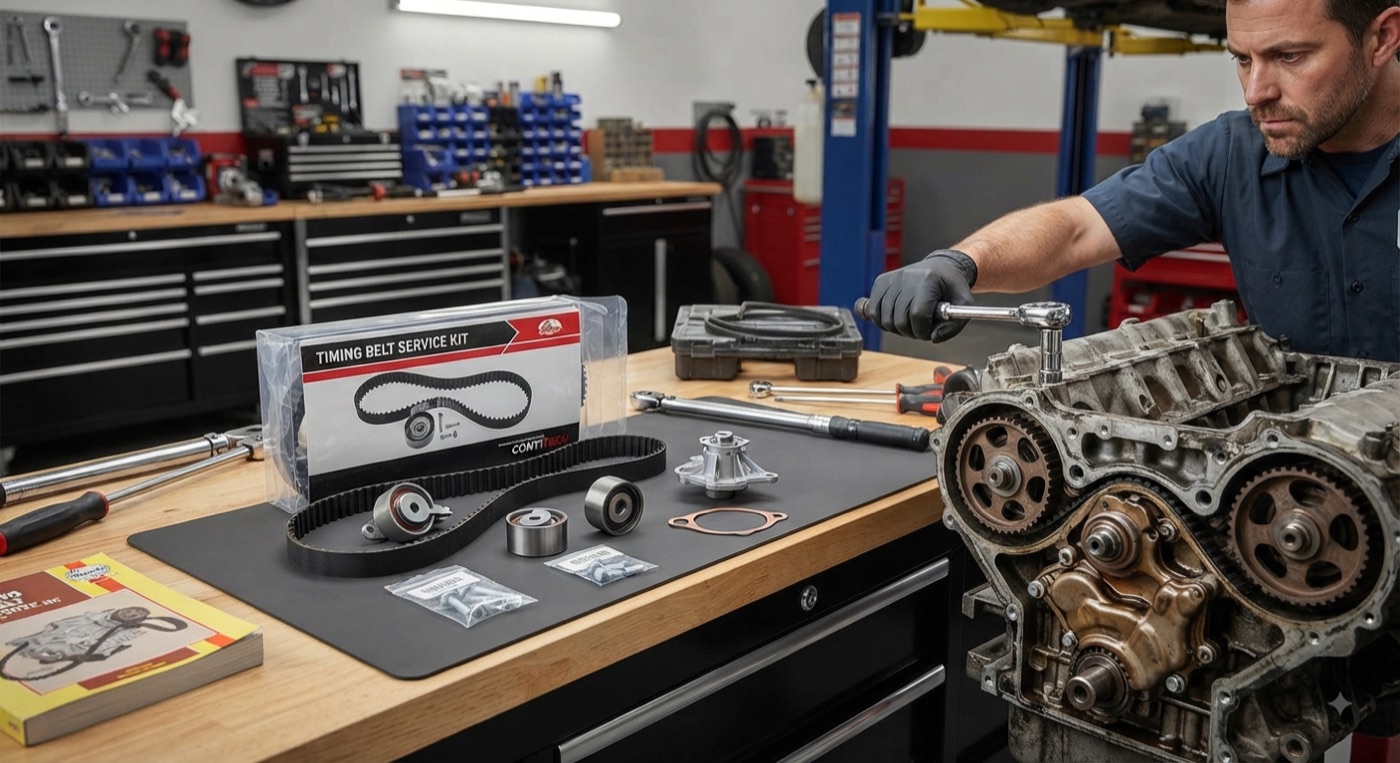
The risk of failure rises sharply after 60–120k km – depending on the engine.
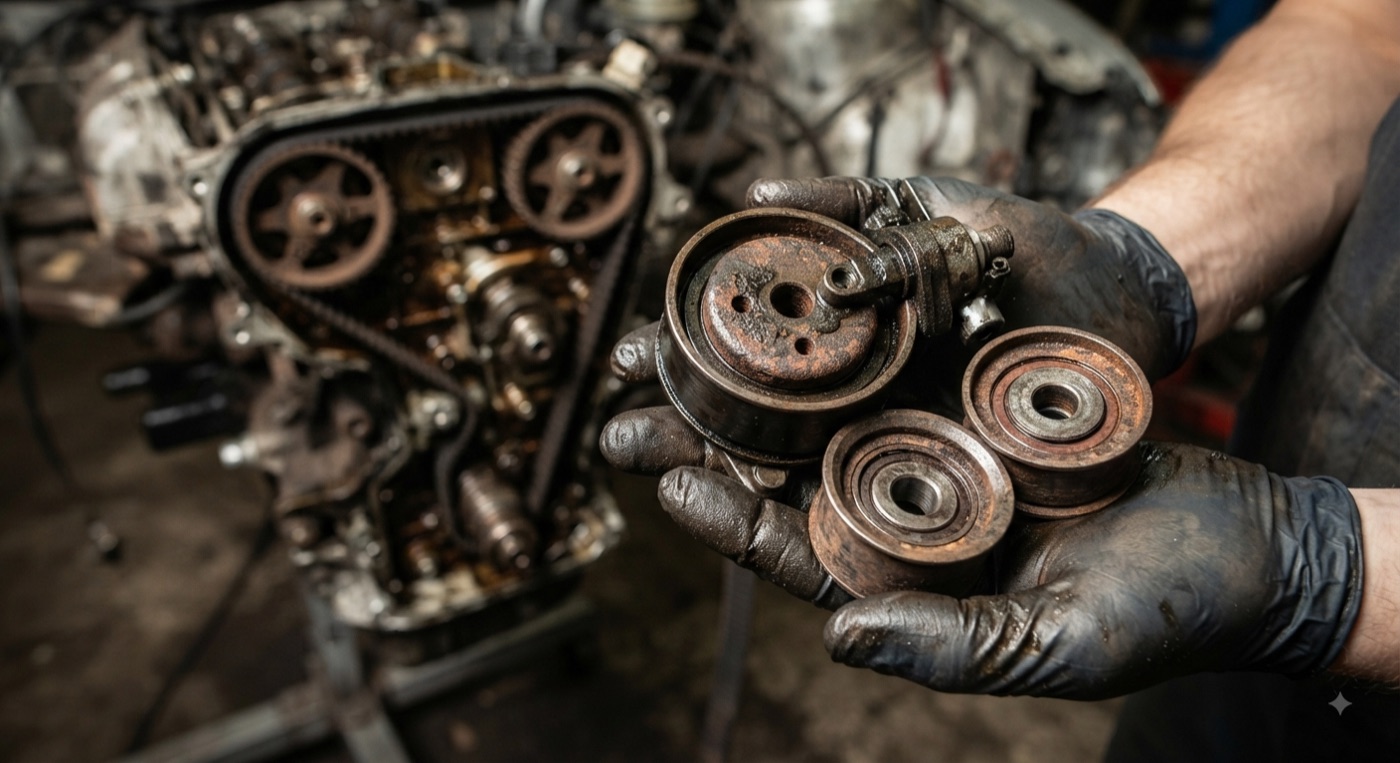
Rollers and tensioners often wear out before the belt or chain itself.
Protect your engine from a snapped timing belt
Timely timing replacement helps avoid engine repairs later
Diagnostics is free, even if you decide to do nothing.
- No pushy upselling
- No obligations
- We reply fast
Service pricing
We'll confirm the exact price after inspecting the car.
Numbers behind
the trust
Reviews
I recommend this workshop – they work precisely and on time, send photos and explain every detail. My husband and I will be back. Thank you for your work!
Translated from UkrainianGenuinely impressed with the service. They replaced the consumables quickly and without unnecessary questions. Big plus for the photo report – it builds trust in a workshop instantly!
Translated from UkrainianCame in for a detailing wash and left seriously happy! The work was done fast and thoroughly, and the price was a pleasant surprise. Definitely recommend!
Translated from UkrainianCame in with the tyre-pressure warning light on. They sorted it in 30–40 minutes. Very polite staff and a comfortable place to wait. Recommend :)
Translated from UkrainianLovely, professional service and the mechanics really know their job. And the waiting area is amazing – I should come more often 😂 100% happy with the work. Recommend 🔥
Translated from UkrainianGreat workshop. They found why my parking lights weren't working – simply oxidised contacts. Cleaned them and didn't even charge me. Recommend!
Translated from UkrainianHuge thanks to the guy who saved the day with the seat in my car, even though I turned up at the very end of the working day. I recommend this workshop for being human and professional!)))
Translated from UkrainianHad my car serviced in Warsaw: oil change, full diagnostics, and they quickly found a wiring fault – all in about half an hour. The mechanics explained everything clearly.
Translated from UkrainianFrequently asked questions
Didn't find an answer? Leave a request – we'll call back shortly.
Book now →To the manufacturer's schedule – usually every 60,000–120,000 km or once every 5–6 years, because the rubber ages with time, not just mileage. Appearance tells you nothing: a belt snaps suddenly, with no warning.
On most modern engines the valves meet the pistons – bent valves, sometimes a damaged cylinder head. That repair costs many times more than replacing the kit on schedule.
Because the rollers and tensioner often fail before the belt does, and a seized roller will shred a new belt just as readily as an old one. We replace the pump while it's accessible – otherwise you pay for the same strip-down again a year later.
Yes, though less often than a belt. The signs are a rattle on cold start and camshaft timing fault codes. We replace the tensioners, guides and sprockets along with the chain – worn parts will stretch a new chain in no time.
Usually from a few hours to a full day, depending on the engine – on some you have to remove the engine mount or ancillaries. We'll give you an exact figure once we know the make and engine.
No. After the job we check the timing marks and how the engine runs on a test drive, and on cars with a dealer protocol we reset the adaptations – after that you just drive as usual.
Timing belt replacement at the RemZone workshop
A timing belt is a closed rubber loop with teeth on one side. As the name suggests, the timing system controls gas exchange in the engine's cylinders. In modern four-stroke engines the fresh fuel mixture enters and the exhaust gases leave through valves located in the cylinder head. The valves are operated by one or more camshafts, and the timing belt drives those shafts, connecting the crankshaft to the camshaft. Reliable as modern cars are, failures still happen and the timing belt sometimes has to be replaced.
A snapped belt is a serious problem: the camshaft stops while the crankshaft keeps hammering the cylinders and deforms them. That is why it is essential to inspect and replace the timing belt every 50,000–60,000 km. The interval can be much shorter under unfavourable conditions: sitting in traffic, engine overheating, poor belt quality and more.
Fortunately, diagnostics and repair can now be booked with us at our Warsaw workshop.
When does the timing belt need replacing?
You can suspect a fault and the need for replacement from the following symptoms:
- problems starting the engine;
- engine vibration while running;
- new, unusual noises from the engine;
- a change in exhaust smoke colour – it takes on a blue or black tint.
Replacing the belt is difficult and fairly labour-intensive; the job calls for specialists. Our RemZone service station in Warsaw, Poland provides exactly that.
What does the replacement involve?
The replacement process and its cost differ depending on the engine. On eight-valve engines it is about as simple as it gets, whereas sixteen-valve units may require new pistons and valves. Sometimes the rollers have to be replaced along with the belt to achieve the correct tension.
Our specialists recommend replacing the associated parts that may have worn or been damaged in service. That genuinely extends the life of the car. Besides the timing belt and water pump – ask our manager for prices – we recommend replacing the tensioner.
Advantages of the RemZone workshop
We provide complete vehicle servicing and can point to the following advantages:
- High-technology equipment (test benches, repair tooling).
- Use of original and good-quality parts and consumables.
- Technicians with more than 10 years of experience.
- Work completed on schedule.
- Affordable pricing.
- A convenient, transparent service for every customer.
What happens if the timing belt is not replaced in time
We have seen many cases where a timing belt replaced too late ended badly. A belt snapped, bending the valves, damaging the guides and sometimes cracking the pistons. We often recorded a loss of engine power after the belt jumped several teeth, and damage to ancillary equipment when fragments of belt got under the cover. There was also a sudden engine shutdown, which in one case happened right on a busy motorway.
All of these problems lead to expensive repairs that few people are happy to pay for – whereas a scheduled timing belt change is a relatively cheap and quick job.