Vibration when braking: discs, pads or suspension
Brake vibration is a technical fault that calls for prompt diagnostics.
Vibration during braking is one of the most common complaints that customers bring to our car service center in Warsaw. The problem is described in different ways: steering wheel shaking, a pulsating brake pedal, body vibrations, or a “wave-like” sensation when the car comes to a stop. We have been working in the automotive repair industry on the Polish market for more than five years and we know for sure that vibration during braking is almost always related to a technical fault. That is why it should not be ignored, as it directly affects the safety of the driver and passengers. In most cases, the cause lies in the brake discs, pads, sometimes the suspension, and less often in the steering system or wheels. Today we will explain how to identify the source of the problem based on symptoms and when you need to urgently go for diagnostics.
Three most common causes of vibration during braking
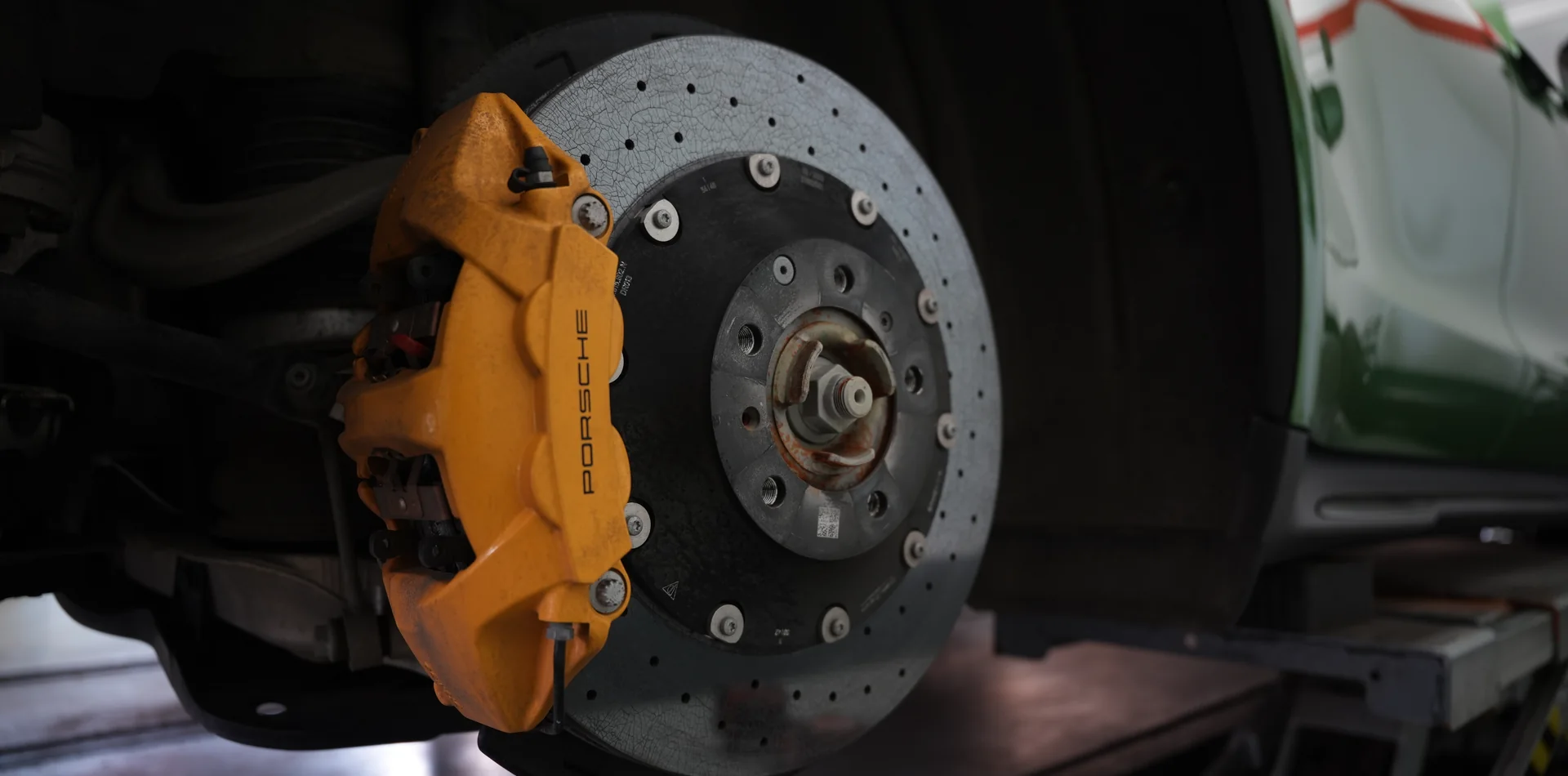
- In about 70–80% of cases reported to our workshop, the issue is related specifically to brake discs. They usually become deformed due to overheating from aggressive driving, sudden cooling (for example, contact with cold water), low-quality parts, improper tightening of wheel bolts, or natural wear. You can identify disc-related issues by steering wheel vibration during braking, increased shaking after the brakes heat up, longer braking distance, and a pulsating brake pedal. Sometimes the cause of vibration is not the disc itself but improper installation or incorrect centering relative to the hub. This often happens for a very simple reason – dirt and rust buildup on the wheel hub surface prevents proper seating of the disc on the hub. In customer vehicles, we often also find over-tightened mounting bolts. This happens when a mechanic does not clean the hub with a wire brush (0.1 mm of rust can cause significant runout) or uses an impact wrench without a torque wrench. We usually solve disc-related issues by replacing them. In some cases, resurfacing is allowed if the disc thickness permits, there are no deep cracks, and the runout is not severe.
- Brake pads less frequently cause vibration, but their proper operation should not be underestimated. When there are issues with pads, drivers usually complain about squeaking during light braking or uneven braking performance. Overheating of a single wheel may also occur. Most often, pad-related problems arise due to low-quality parts, incorrect installation, improper or missing bedding-in, or a seized caliper. In our practice at RemZone, every second “unexplained” vibration case turns out to be a seized caliper. Due to a damaged dust boot, road salt from winter roads in the Mazovian region gets inside, the guide pins seize, and the pad constantly presses against the disc. The disc overheats, warps – and you end up with a shaking steering wheel.
- Suspension problems occur less frequently, but vibration can be caused by elements such as ball joints, control arm bushings, tie rod ends, and wheel bearings. You can recognize suspension-related issues by specific symptoms: vibration appears only during braking, knocking noises occur when driving over bumps, or there is steering play. With constant vibration, we usually find issues related to wheel balance or tires.
Other causes of braking vibration
For example, Warsaw roads in spring after frosts or cobblestone streets in the Praga district often cause bent wheels, leading to vibrations similar to brake-induced shaking. Another example is a worn wheel bearing, which causes humming, vibration under load, and unstable braking. Sometimes what is perceived as braking vibration is actually the normal operation of the ABS system, which can cause pedal pulsation during emergency braking.
Quick checklist from RemZone mechanics
- If the steering wheel shakes – check the front discs or suspension components.
- If the pedal and body vibrate – the rear brake discs are most likely warped.
We do not recommend ignoring vibration, even if it seems minor. You should urgently visit a service center if the vibration increases, braking distance becomes longer, the car pulls to one side, metallic noises appear, or wheels overheat. Book a diagnostic at “RemZone” and within 30 minutes we will determine the cause of the vibration in your vehicle.
Need a mechanic's advice?
Brake system repair →