Preparing your car for a trip across Poland and Europe: what to check
Three hours of motorway at 140 km/h is a test that exposes everything city driving forgave.
In city driving conditions, a car can tolerate minor issues for years. However, long uphill drives on Austrian mountain roads or three hours of continuous driving on a German autobahn at speeds of 130–140 km/h are a massive stress test for all vehicle systems. Engine overheating, a seized brake caliper, or a burst old hose can completely ruin your vacation. At RemZone service in Warsaw, we have been preparing customers’ cars for long-distance trips for over 5 years and we know which components fail first under heavy loads.
Why is it important to check your car before traveling abroad?
Many car owners believe: if a car works fine in the city, it will easily make it to Vienna. This is a dangerous misconception. A journey of thousands of kilometers places a completely different level of stress on all systems. The main risks include:
- In other European countries, repair costs are significantly higher compared to Poland. For example, a simple alternator repair or clutch replacement may cost 500–800 euros, while in our service such work starts from 400 PLN.
- Language barriers and finding a suitable repair shop. Explaining to a German or Czech mechanic what exactly is knocking in the suspension when turning the steering wheel is not easy. Finding a reliable workshop in an unfamiliar area is also a real challenge.
- Reduced safety for drivers and passengers. Faults in the braking or steering system at highway speeds can pose a serious threat to life.
- Loss of valuable vacation time. Instead of enjoying your trip and sightseeing, you will have to deal with technical problems.
When do we recommend preparing your car for a trip?
We recommend performing diagnostics 7–14 days before your planned departure. This is enough time for our technicians to fix all issues and order necessary parts without rushing. This is especially important if your car has not had a recent service and you are planning a journey of several thousand kilometers.
What do we usually check?
- The level and condition of engine oil, coolant, brake fluid, and windshield washer fluid. Old brake fluid absorbs moisture and, during heavy braking on descents, can boil, causing the brake pedal to sink. It is also important to assess the cleanliness of the radiators – if they are clogged with dirt and dust, the engine will quickly overheat on the highway.
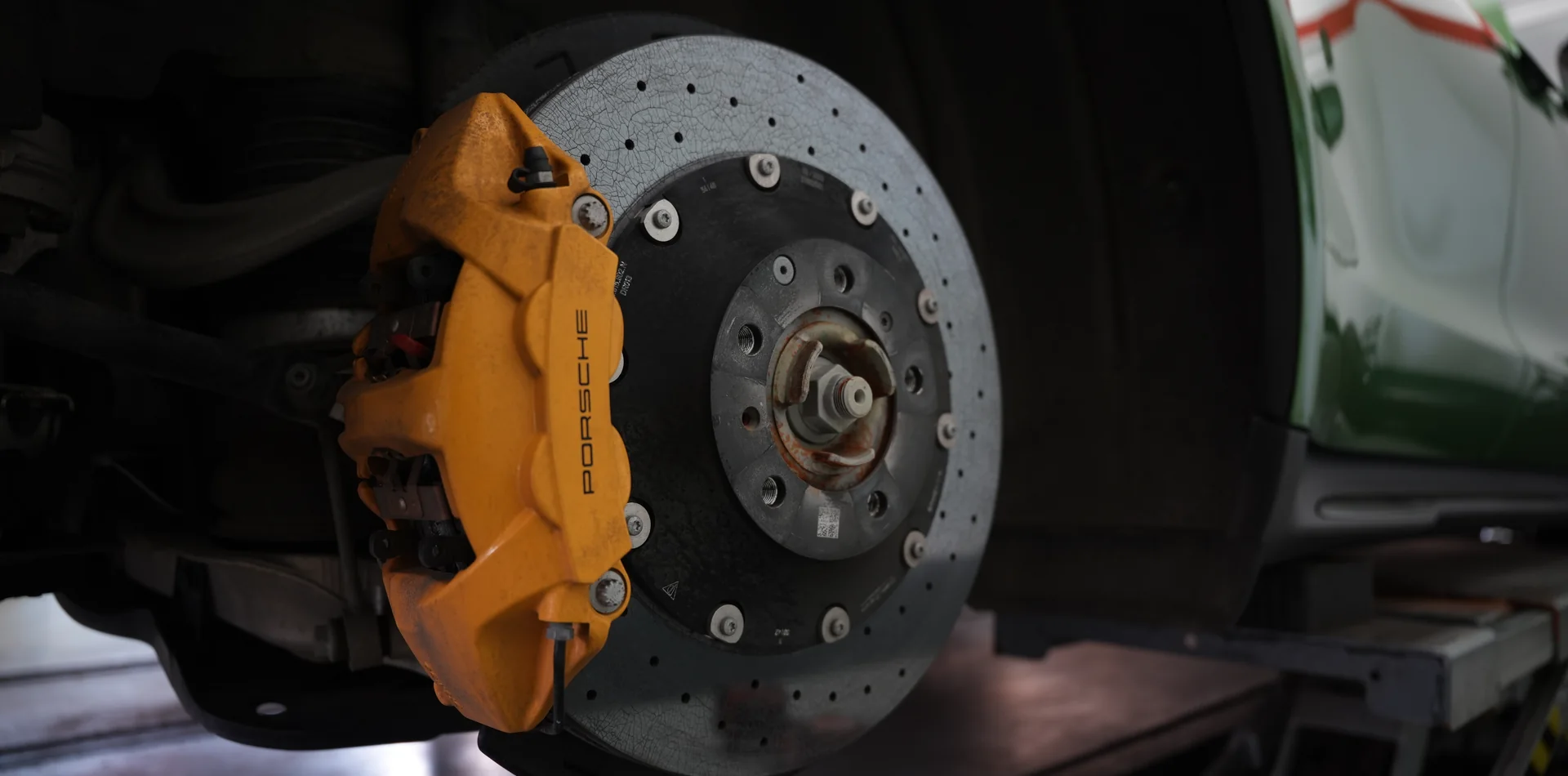
- Brake system condition. Any squeaking pads, steering wheel vibration during braking, or increased braking distance are clear warning signs that should not be ignored. We assess brake pad and disc wear (to ensure they last for several thousand kilometers), check caliper operation, hose tightness, and ABS sensor functionality.
- Suspension and steering system, especially if the driver has already noticed knocking or vibration. Driving on European highways puts constant load on these systems, so even minor issues can become serious problems. We recommend performing wheel alignment before long trips.
- Tire pressure, tread depth, absence of cracks or damage, condition of the spare wheel, and availability of a repair kit.
- We inspect all lighting and test the battery with a load tester. If the battery is already near the end of its life, long parking periods with devices running (such as a portable fridge or electronics) can fully discharge it. Driving with a faulty headlight or side light in the EU results in a high fine.
What must be in your car according to European regulations?
In addition to technical condition, most European countries have strict requirements for mandatory equipment. Missing any of the following items guarantees a fine:
- Warning triangle – mandatory in all EU countries.
- First aid kit – must be present and comply with DIN 13164 standard.
- Fire extinguisher – mandatory in most EU countries.
- Reflective vest – must be kept inside the cabin, not in the trunk (vests should be available for all passengers).
At our service center, you can get a full pre-trip inspection: from brake and suspension diagnostics to scheduled maintenance. The service operates in two locations in Warsaw – Białołęka and Mokotów.
Need a mechanic's advice?
Brake system repair →